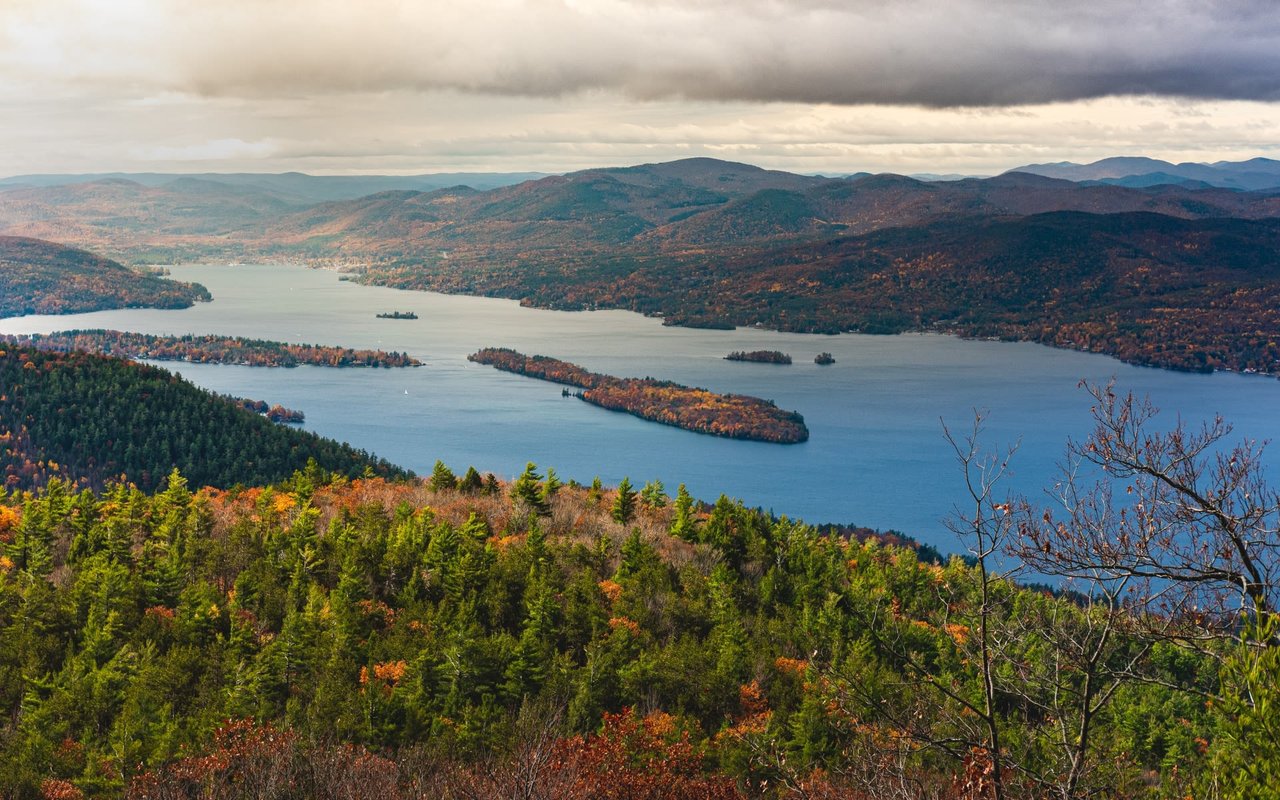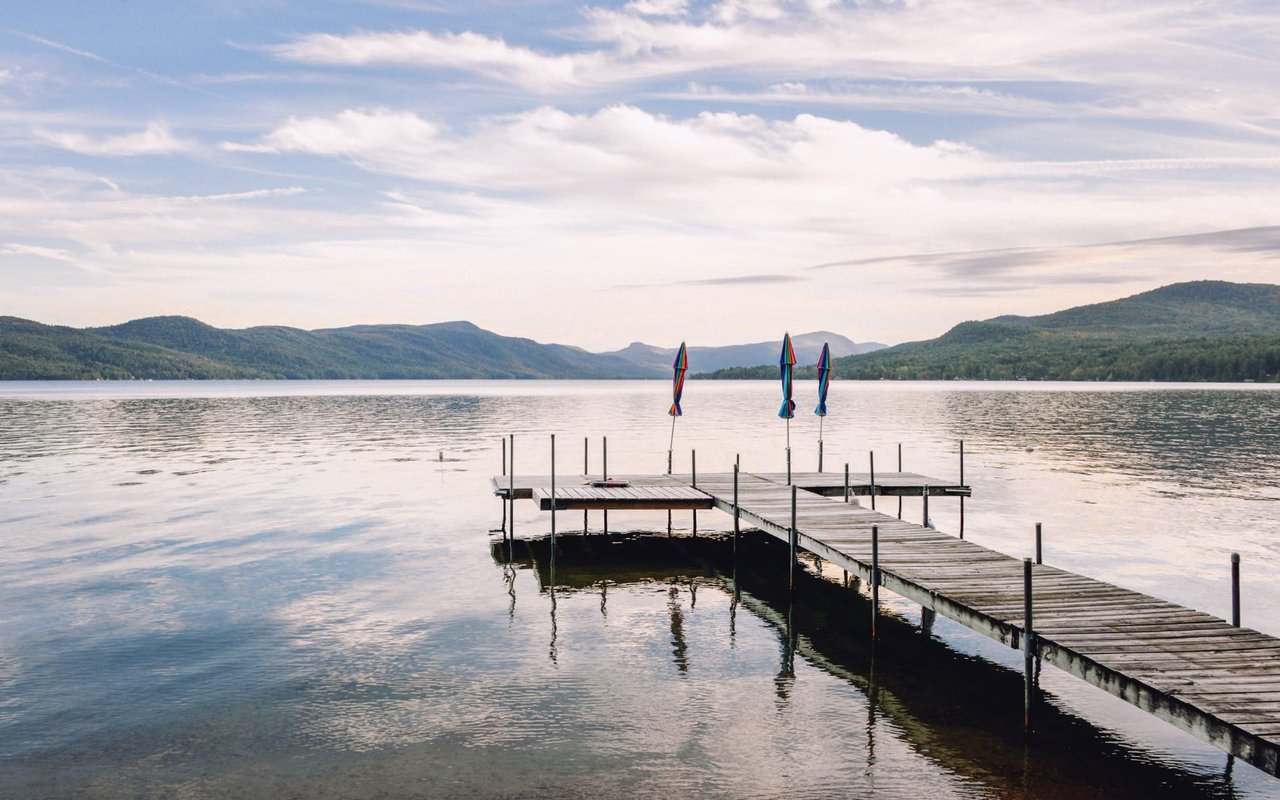
Two listings on the same stretch of Gull Bay Road tell you almost nothing about each other, and that is the point. One is a modest three-season cottage with 240 feet of southerly lakefront, a brick fireplace, and walls of glass angled to catch the view. A few properties down, a 431-acre parcel of undeveloped Adirondack woodland was priced at roughly $1.6 million for the land alone, paired with a custom home that pushed the combined asking price past $7 million. Same road. Same shoreline. Completely different math, and neither number tells you what actually determines whether the next project on that road gets built the way the seller imagines it will.
That answer does not live in the tax assessor's file or the MLS description. It lives in the minutes of the Putnam Town Board, where for most of 2026 officials have been deciding whether the town even keeps a Planning Board.
The math nobody living there controls
Putnam holds 13 miles of shoreline on Lake George, more than almost any other town on the lake, spread across a small year-round population. That geography creates a specific imbalance. Lake George Association vice president of communications Tim Behuniak has pointed out that property owners on the water pay 75 percent or more of the town's tax revenue, yet most of them are not full-time residents and cannot vote in Putnam's local elections. The people with the largest financial stake in how the shoreline gets regulated have the smallest formal voice in who regulates it.
That imbalance is not a footnote. It is the reason a small town with a tiny year-round population and a volunteer government can make a zoning decision this year that changes what a buyer is actually purchasing next year, without the people most affected by it ever casting a vote.
What happened, in order
The timeline matters more than the outcome, because as of the most recent public update the outcome is still unresolved.
- February 7, 2026 – Putnam officials announced a public hearing to consider repealing the town's Site Plan Review Law and abolishing its Planning Board, a change Town Supervisor Darlene Kerr described as a move toward a more streamlined development process.
- February 10, 2026 – The comment deadline passed after the Lake George Association's action alert generated a wave of written opposition.
- February 12, 2026 – At the public hearing, more than 20 attendees spoke and all of them opposed the resolution. According to the Adirondack Explorer, the board amended it, voting 3-1 with one abstention to keep the Site Plan Review Law but eliminate the Planning Board itself, shifting its review duties to the Town Board.
- March 12, 2026 – The Lake George Association reported that Lake George Waterkeeper Chris Navitsky submitted a formal letter arguing the February vote had skipped the environmental review required under New York's State Environmental Quality Review Act, and that the amended law had not been advertised as state law requires.
- Late March 2026 – The Town Board rescinded its February vote, resetting the process.
- April 9, 2026 – The town was expected to begin the required SEQRA review before reconsidering the law, per the Lake George Association's most recent public update.
Nothing in the public record since then confirms a final vote. A buyer researching Putnam today is researching a town mid-decision, not a town with settled rules.
The stakes of that decision are more specific than "less government." Board member Mark Karlson, one of the few consistent no votes, pointed out that Putnam's site plan law is also what regulates signage on the lakeshore and roadways. Without it, he said, there would be no rule against large lighted signs going up along the water.
What a planning board actually catches
It helps to be specific about what changes hands when review moves from a dedicated board to the Town Board itself.
| Function | Under a Planning Board | Under direct Town Board review |
|---|---|---|
| Review focus | Trained volunteers evaluating runoff, erosion, setbacks, signage | Elected officials handling review alongside general town business |
| Public hearing cadence | Monthly, dedicated meetings | Folded into existing Town Board agenda |
| Precedent on developer disputes | Board has stood up to proposed projects in the past | Untested under the new structure |
That last row is not hypothetical. Navitsky has referenced an earlier case where Putnam's planning board pushed back on a large developer, and the property in question eventually ended up in the hands of a land conservancy instead. Whether the current Town Board would reach the same result under a compressed review process is exactly the kind of question that has no answer yet, because it has not been tested.
The counter-force next door
While the town debates how much oversight to keep, a separate organization is racing to take some of the shoreline off the market entirely. The Lake George Land Conservancy launched a $1.8 million capital campaign to purchase 431 acres in Putnam's Gull Bay area, a parcel known as Mud Pond West that includes the western third of Mud Pond and more than 3,400 feet of Class AA-special stream corridor. The conservancy moved quickly to outbid another offer when the land came up for sale in the fall of 2025, describing it as one of the largest privately owned undeveloped parcels left in the Lake George watershed and noting that development there would have been visible from the lake itself.
The parcel is not isolated. To its north it nearly connects to more than 1,700 acres that include the conservancy's Anthony's Nose and Sucker Brook Preserves. To its south it links to more than 1,000 acres and three miles of shoreline, including the Clark Hollow Bay property the conservancy protected in 2022. The Nature Conservancy also awarded the campaign a $50,000 grant through its New York Climate Resilience Grant Program, citing the site's biodiversity and connectivity value. The acreage matches a 431-acre Gull Bay tract that had been on the market bundled with a house, which is almost certainly the same land the conservancy moved to protect rather than a separate parcel of the same size.
Put the two threads together and Putnam looks like a town pulling in opposite directions at once. One process is loosening the review structure that has historically slowed or reshaped development. The other is permanently removing large chunks of the same shoreline from the market before that process finishes changing. Both are happening on the same road, in the same calendar year, and a buyer evaluating a Gull Bay property right now is stepping into the middle of both.
What this means if you are underwriting a purchase here
The 431-acre land parcel priced around $1.6 million and the 240-foot cottage listing were both set before this year's governance fight reached its current, unresolved state. Neither price reflects a discount or premium for regulatory uncertainty, because the uncertainty was still developing while those numbers were set. That gap between price and process is the actual opportunity, and the actual risk, depending on which side of a purchase you are on.
A few things worth confirming before writing an offer on shoreline property in Putnam specifically:
- Ask whether the parcel or its neighbors have any site plan applications pending, and whether they would be reviewed by a Planning Board or directly by the Town Board under current rules.
- Check whether a property near yours borders land the Lake George Land Conservancy has targeted.
- Confirm the annual tax bill against comparable waterfront parcels. One 2.45-acre lakefront property on Gull Bay Road carries an annual tax bill above $11,000, a useful benchmark for what carrying costs actually look like on comparable acreage.
- Recognize that Putnam is not interchangeable with Bolton Landing or Hague this year. Those towns have their own zoning frameworks and are not going through the same process, so a comparison based purely on price per foot of shoreline misses the part of the picture that matters most right now.
None of this means Putnam is a bad bet. Thirteen miles of shoreline, comparatively lower land costs, and an active conservation effort protecting the character of the area are real, durable advantages. It means the diligence looks different here than it does two towns over, and the difference is worth understanding before you fall for a view.
A few direct questions
Is the Planning Board gone for good in Putnam? Not as of the most recent public update. The Town Board rescinded its February 2026 vote and was expected to restart the required state environmental review at its April 9 meeting before reconsidering the law again.
Where do the two issues overlap most visibly? Gull Bay is where the two competing forces, the review debate and the conservancy's active land purchase, happen to overlap most visibly right now.
Should I wait to buy until this resolves? That depends on your goals. A buyer planning to build or subdivide has more reason to confirm the current review process before committing than someone purchasing an existing home with no development plans.
If you are weighing a purchase on Lake George's north shore and want a clear read on what a specific parcel's zoning history actually looks like before you make an offer, Sherwood Group, LLC can walk the parcel, the process, and the paperwork with you. What's your property worth?
This article is general information, not legal, tax or financial advice. Consult a qualified professional about your situation.